

How to Choose the Right Air Pollution Control Equipment Manufacturer in India
Air pollution has become a major concern for industries across India. Manufacturing plants, chemical industries, power stations, cement factories, pharmaceutical companies, and other industrial facilities release pollutants that can negatively affect air quality, employee health, and the environment. With stricter environmental regulations and growing awareness of sustainable manufacturing, controlling industrial emissions has become an essential responsibility for businesses.
Choosing the right Air Pollution Control Equipment Manufacturer is an important step towards maintaining cleaner industrial operations. The right manufacturing partner can help businesses select suitable pollution control systems, improve operational efficiency, reduce emissions, and meet environmental compliance requirements.
However, with several manufacturers offering different technologies and solutions, finding a reliable partner can be challenging. This blog explains the key factors businesses should consider before selecting an air pollution control equipment manufacturer in India.
1. Understand Your Industrial Air Pollution Requirements
Before contacting any manufacturer, understand the type of air pollution generated by your industrial operations. Different industries produce different pollutants, including dust, smoke, fumes, chemical vapours, and harmful gases.
For example, cement plants may generate significant amounts of dust, while chemical and pharmaceutical industries may release hazardous fumes and gases. Each pollution challenge requires a suitable control technology.
Start by evaluating:
- The type of pollutants generated during production.
- The volume and temperature of exhaust gases.
- The concentration of dust, fumes, or harmful particles.
- The operating conditions of your industrial facility.
- Applicable environmental emission limits.
A manufacturer who understands your industry’s requirements can recommend equipment that delivers effective pollution control rather than offering a standard solution for every application.
2. Check the Manufacturer’s Industry Experience
Experience is one of the most important factors when selecting an Air Pollution Control Equipment Manufacturer in India. Industrial air pollution control involves technical knowledge, engineering expertise, and an understanding of different manufacturing environments.
An experienced manufacturer is more likely to understand the challenges associated with high-temperature gases, heavy dust loads, corrosive substances, and continuous industrial operations.
Before making a decision, check:
- How many years the manufacturer has been operating.
- Which industries they have served.
- Whether they have completed similar industrial projects.
- Their technical knowledge and engineering capabilities.
- Their ability to handle customised requirements.
You should also ask for project references, previous installations, and relevant case studies. These details can help you evaluate the manufacturer’s practical experience and reliability.
3. Evaluate the Range of Air Pollution Control Equipment
A reliable manufacturer should offer equipment suitable for different industrial pollution challenges. Having access to multiple technologies makes it easier to select a system based on your facility’s actual requirements.
Some commonly used air pollution control equipment includes:
Industrial Dust Collectors: These systems capture airborne dust particles generated during manufacturing, material handling, grinding, and processing operations.
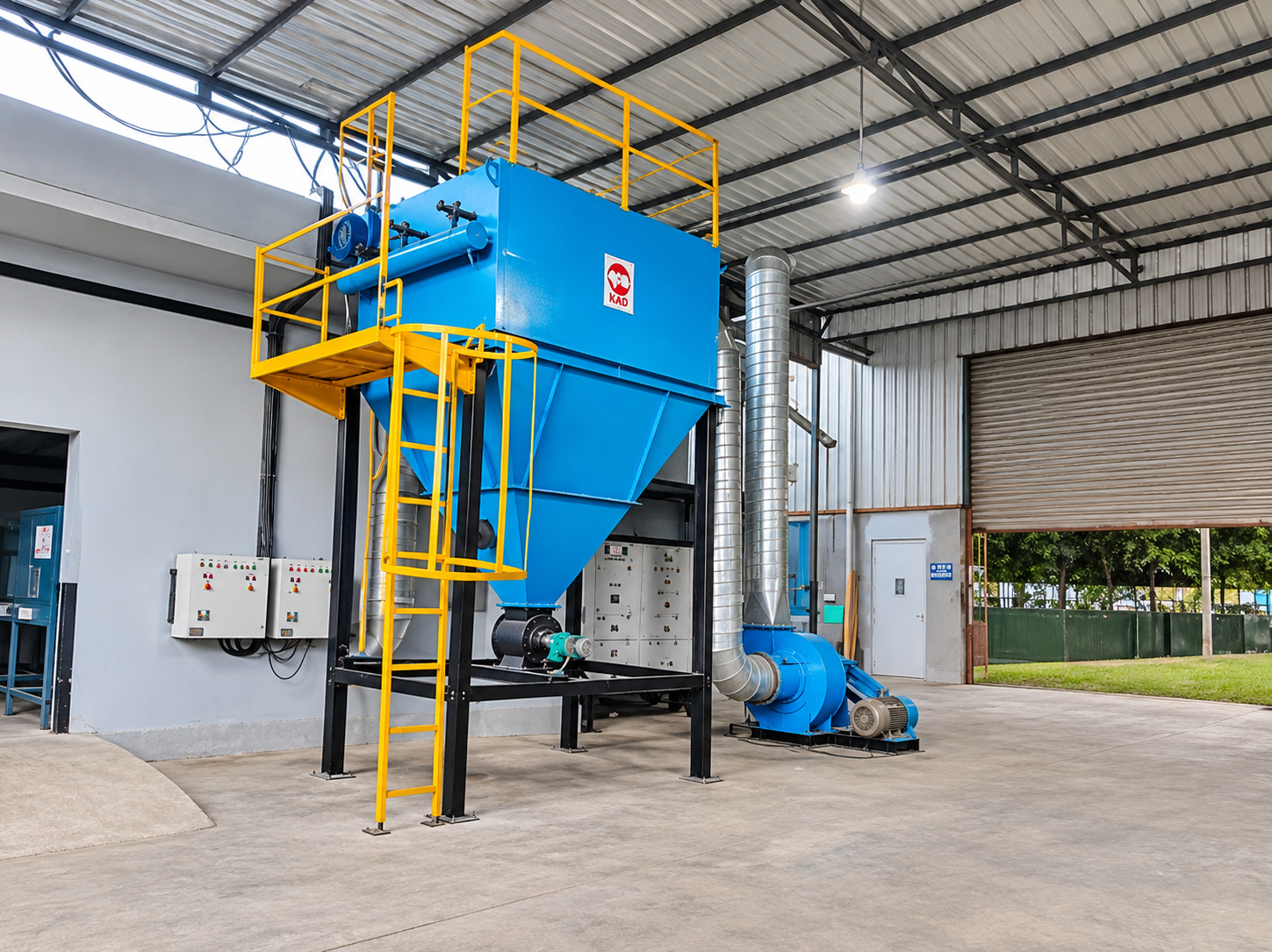
Bag Filter Systems: Bag filters use specially designed filter bags to separate dust particles from industrial exhaust gases. They are widely used in cement, steel, chemical, and other manufacturing industries.
Electrostatic Precipitators (ESP): ESP systems use electrical charges to remove fine particulate matter from industrial gas streams.
Wet Scrubbers: Wet scrubbers use liquid solutions to remove certain pollutants, including particulate matter and soluble gases, from exhaust streams.
Cyclone Separators: These systems use centrifugal force to separate larger dust particles from gas streams and are often used as pre-cleaning equipment.
Before selecting a manufacturer, understand whether they can recommend the right technology according to your pollution load, industry type, and operational requirements.
4. Look for Customised Engineering Solutions
Every industrial facility has different operational requirements. A pollution control system designed for a cement manufacturing plant may not be suitable for a pharmaceutical or chemical processing facility.
Therefore, choosing a manufacturer that provides customised engineering solutions is important.
A capable manufacturer should consider your plant layout, production capacity, exhaust volume, operating temperature, pollutant characteristics, and available installation space before recommending equipment.
Customised solutions can offer several advantages:
- Better pollution removal performance.
- Improved compatibility with existing machinery.
- Efficient use of installation space.
- Reduced unnecessary operating costs.
- Greater flexibility for future expansion.
Avoid choosing equipment based only on its initial price or standard specifications. The system should be technically suitable for your specific industrial application.
5. Verify Quality Standards and Manufacturing Capabilities
The quality of air pollution control equipment directly affects its performance, durability, and maintenance requirements. Poorly manufactured equipment may lead to frequent breakdowns, inefficient filtration, and unexpected operational expenses.
Before finalising a manufacturer, evaluate the materials, components, fabrication processes, and quality inspection procedures used during production.
Consider asking the manufacturer about:
- Raw material quality and specifications.
- Equipment design and fabrication standards.
- Quality testing and inspection procedures.
- Component durability and reliability.
- Relevant certifications and compliance documentation.
You should also understand whether the manufacturer has its own production facilities, skilled technical teams, and adequate infrastructure to handle your project requirements.
A quality-focused manufacturing partner can help ensure long-term equipment reliability and consistent industrial performance.
6. Consider Energy Efficiency and Operating Costs
The purchase price is not the only expense associated with industrial air pollution control equipment. Businesses must also consider electricity consumption, replacement components, maintenance, cleaning, and other operating costs.
For example, an inefficient dust collection system may require higher fan power or frequent filter replacement, increasing its overall operating expenses.
When comparing manufacturers, ask about:
- Energy consumption during normal operations.
- Pressure drop across filtration systems.
- Filter replacement frequency.
- Maintenance requirements.
- Availability and cost of spare parts.
Look beyond the initial investment and calculate the total cost of ownership. A properly designed, energy-efficient system can help businesses manage operating expenses while maintaining effective pollution control.
7. Check Compliance with Indian Environmental Regulations
Industrial facilities in India must follow applicable environmental standards and pollution control requirements. Depending on the industry and location, businesses may need to comply with guidelines established by the Central Pollution Control Board (CPCB), State Pollution Control Boards (SPCBs), and other relevant authorities.
Selecting an experienced Air Pollution Control Equipment Manufacturer can help businesses understand the technical requirements associated with emission control.
Before selecting a supplier, discuss:
- Applicable emission standards for your industry.
- Required particulate matter and gas emission limits.
- Equipment performance specifications.
- Monitoring and testing requirements.
- Relevant regulatory documentation.
Remember that purchasing pollution control equipment does not automatically guarantee regulatory compliance. Actual compliance depends on equipment performance, proper installation, operation, maintenance, and applicable permissions.
8. Evaluate Installation, After-Sales Support, and Maintenance
Even high-quality equipment requires proper installation and regular maintenance to perform effectively. A manufacturer that offers support beyond equipment delivery can make industrial operations much easier.
Check whether the company provides:
- Professional installation and commissioning.
- Technical assistance during operation.
- Preventive maintenance services.
- Troubleshooting and repair support.
- Spare parts and replacement components.
- Operator training and maintenance guidance.
After-sales support becomes particularly important for industries operating continuously. Delayed maintenance or equipment failure can interrupt production and increase operational costs.
Choose a manufacturer that can provide dependable technical assistance throughout the equipment’s working life.
9. Compare Pricing, Delivery Time, and Project Transparency
Budget is an important consideration, but selecting the cheapest manufacturer may not always be the best decision. Low-cost equipment may involve compromises in material quality, filtration performance, or after-sales support.
Request detailed quotations from multiple manufacturers and compare their offerings carefully.
A transparent quotation should ideally include equipment specifications, materials, project scope, installation charges, delivery schedules, warranty conditions, and maintenance terms.
Also, discuss the expected manufacturing and installation timelines. Delays in equipment delivery can affect production schedules, particularly when a new plant or facility is being established.
Choose a manufacturer that provides clear communication, realistic commitments, and transparent commercial terms.
Why Choose the Right Air Pollution Control Equipment Manufacturer?
The right manufacturing partner contributes to more than just pollution control. It supports the overall efficiency and sustainability of industrial operations.
Working with a reliable manufacturer can help businesses achieve:
- Improved industrial air quality.
- Effective dust and emission management.
- Better workplace conditions.
- Reduced environmental impact.
- Improved operational efficiency.
- Long-term equipment reliability.
- Better preparation for environmental compliance.
The right equipment, combined with proper operation and maintenance, can make industrial pollution management more effective and sustainable.
Why Consider Cloud Zappy for Industrial Digital Solutions?
At Cloud Zappy, we understand that modern industries need reliable technology, efficient digital operations, and solutions that support long-term business growth.
When researching an Air Pollution Control Equipment Manufacturer, businesses should prioritise technical expertise, manufacturing quality, regulatory understanding, and dependable customer support. These factors help organisations make informed purchasing decisions and select equipment that matches their industrial requirements.
Cloud Zappy focuses on digital solutions and technology-driven business growth. Businesses looking to strengthen their online presence can explore our web app development and digital marketing services through our website.
Visit Cloud Zappy to learn more about our services.
Building a Cleaner Future With the Right Pollution Control Solutions
Choosing the right Air Pollution Control Equipment Manufacturer requires careful research and evaluation. Businesses should consider industry experience, equipment quality, customised engineering, energy efficiency, regulatory requirements, installation services, and after-sales support before making a final decision.
Instead of focusing only on equipment prices, evaluate the manufacturer’s ability to deliver reliable, efficient, and long-lasting pollution control solutions.
A well-selected manufacturing partner can help your organisation reduce industrial emissions, improve workplace air quality, manage operating expenses, and move towards more environmentally responsible industrial operations.
Make an informed decision today and take a practical step towards cleaner and more sustainable industrial growth.