

Choosing Ajmera Metals for Air Pollution Control Equipment Solutions
Air pollution has become an important concern for industries across India. Manufacturing plants, processing facilities, engineering units, power plants, and other industrial operations can generate dust, fumes, smoke, and other airborne pollutants. Controlling these emissions is essential for maintaining a safer workplace, protecting the surrounding environment, and supporting responsible industrial operations.
Choosing the right Air Pollution Control Equipment Manufacturer is therefore an important decision for any business that needs an effective industrial air pollution management system. The right manufacturer can help businesses select suitable equipment, understand their specific requirements, and develop solutions that are practical for their operating conditions.
With growing industrial activity and increasing attention toward environmental responsibility, companies need pollution control solutions that combine dependable performance, suitable material selection, efficient operation, and long-term durability. This is where an experienced manufacturing partner such as Ajmera Metals can provide valuable expertise.
What Is Air Pollution Control Equipment?
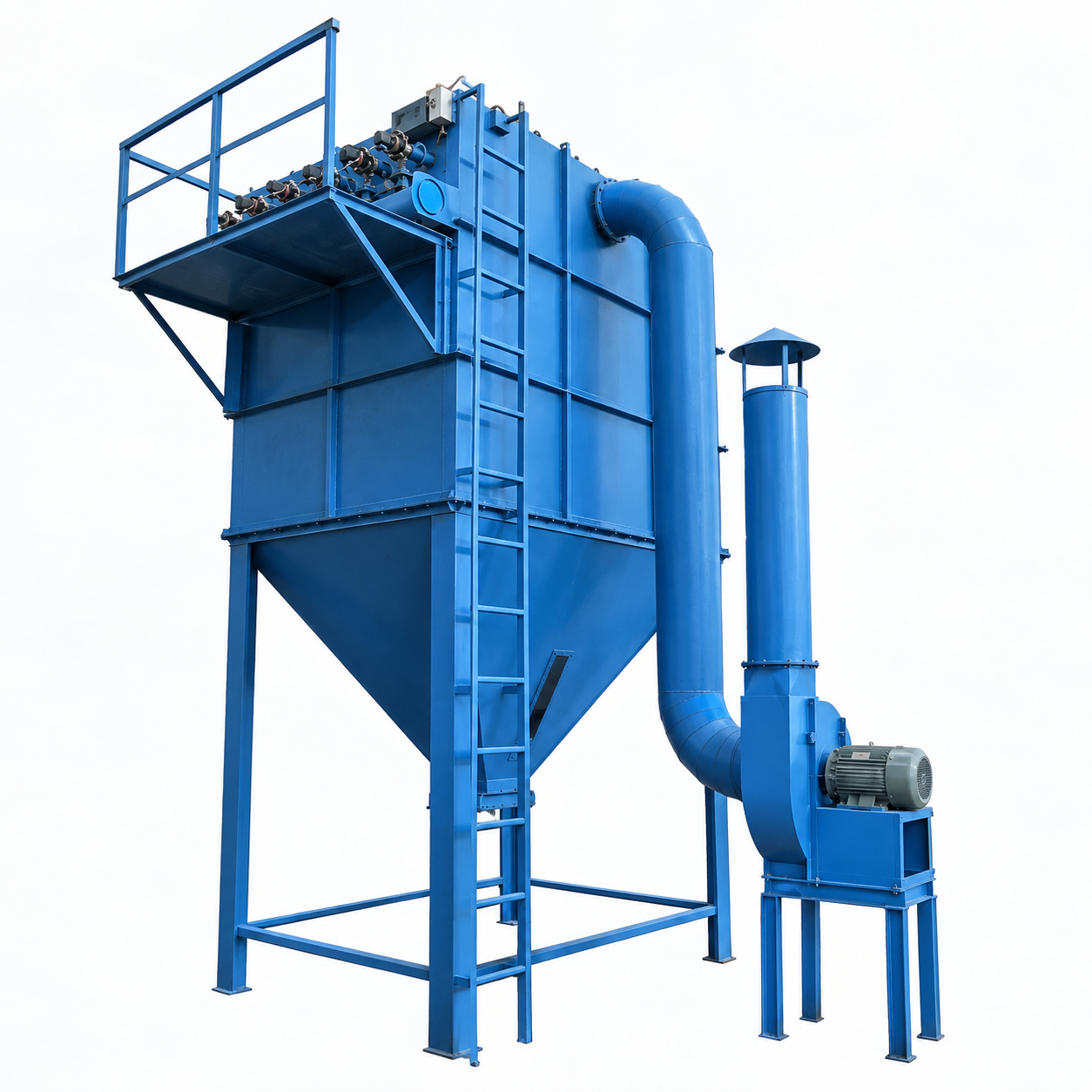
Air pollution control equipment refers to industrial systems and components designed to capture, separate, filter, or reduce unwanted particles and pollutants from exhaust air before they are released into the surrounding atmosphere.
Different industries produce different types of emissions. For example, one facility may generate large quantities of dust, while another may produce fumes, smoke, or fine particulate matter. As a result, pollution control equipment needs to be selected according to the nature of the application.
Common equipment and systems used for industrial air pollution control can include:
- Dust collectors
- Baghouse filtration systems
- Cyclone separators
- Scrubbers
- Cartridge filters
- Industrial ventilation systems
- Fume extraction systems
- Ducting and supporting structures
- Customized metal components
The exact configuration depends on factors such as the type of pollutant, air volume, temperature, operating environment, and process requirements.
Why Is Air Pollution Control Important for Industries?
Effective pollution control is not only about environmental responsibility. It can also contribute to better working conditions, improved process management, and more reliable industrial operations.
Industrial facilities may experience several challenges when airborne pollutants are not properly controlled. Dust can accumulate around machinery and work areas, while fumes and other emissions can affect workplace air quality. Excessive particulate buildup can also create maintenance challenges and interfere with equipment operation.
A properly planned pollution control system can help address these concerns by capturing contaminants at appropriate points within an industrial process.
For businesses, working with an experienced Air Pollution Control Equipment Manufacturer can make it easier to identify the right approach instead of selecting equipment based only on generic specifications.
What Makes a Reliable Air Pollution Control Equipment Manufacturer?
Selecting a manufacturer requires more than comparing product prices. The manufacturer should understand industrial requirements and have the ability to provide products or components suited to the application.
Here are some important factors to consider.
1. Manufacturing Expertise
Experience matters when dealing with industrial equipment and engineered metal components. A manufacturer with established production capabilities is generally better positioned to understand material requirements, fabrication challenges, dimensional accuracy, and application-specific needs.
Before selecting an Air Pollution Control Equipment Manufacturer, businesses should review the company’s manufacturing capabilities and technical experience.
2. Customized Solutions
Not every industrial facility has the same requirements. Airflow, equipment dimensions, installation conditions, operating temperatures, and available space can vary considerably.
For this reason, customized manufacturing can be important. A capable Air Pollution Control Equipment Manufacturer should be able to support application-specific requirements instead of relying only on standard designs.
3. Engineering and Tooling Capabilities
Complex industrial components often require accurate forming, fabrication, tooling, and dimensional control. In-house tooling and engineering capabilities can help manufacturers produce consistent components according to specified requirements.
This becomes particularly useful when businesses need custom profiles or engineered sections for pollution control equipment and related industrial systems.
4. Quality Control
Quality control should be an important part of the selection process. Consistent dimensions, material quality, surface finish, and structural performance can influence the reliability of industrial components.
Businesses should therefore consider manufacturers that follow systematic quality processes and maintain appropriate inspection practices throughout production.
How Ajmera Metals Supports Industrial Manufacturing Requirements
Ajmera Metals is an established manufacturer of cold roll formed sections and engineered metal products. The company serves multiple industrial sectors, including automotive, solar energy, electrical, construction, air pollution control, textile, elevators, and general engineering.
Its manufacturing approach combines engineering knowledge, tooling capabilities, research and development, and quality control to produce standard as well as customized metal profiles.
For pollution control applications, engineered metal sections can play an important role in the construction and support of industrial systems. Depending on project requirements, accurately manufactured sections can be used in equipment structures, supports, frameworks, and other related applications.
As an Air Pollution Control Equipment Manufacturer partner, the ability to understand customized dimensions and industrial requirements can be particularly valuable for businesses working on specialized projects.
Applications of Air Pollution Control Equipment
Air pollution control solutions are used across a wide range of industries because emission characteristics can differ from one manufacturing process to another.
Some common application areas include:
Manufacturing Industries
Manufacturing facilities may generate dust, fumes, and particulate emissions during cutting, grinding, forming, welding, processing, or other operations. Appropriate extraction and filtration systems can help manage these emissions.
Metal and Engineering Industries
Metalworking processes can produce airborne particles and fumes. Pollution control systems can be integrated with extraction arrangements to capture contaminants near their source.
Power and Energy Facilities
Power-related industrial operations may generate particulate matter and other emissions depending on the fuel and process being used. Specialized control systems can help manage exhaust streams.
Chemical and Processing Industries
Chemical and processing plants may produce fumes, vapors, or particulate emissions. Equipment selection needs to consider the characteristics of the material being handled and the operating environment.
Benefits of Working With an Experienced Manufacturer
Choosing an experienced Air Pollution Control Equipment Manufacturer can provide several advantages beyond simply purchasing a product.
One major benefit is better alignment between the equipment and the industrial application. Manufacturers with technical knowledge can understand project requirements and recommend suitable materials, dimensions, and configurations.
Another advantage is consistency. Industrial projects often require multiple components manufactured to specific dimensions. Reliable production processes can help maintain consistency across different batches.
Customization is another important benefit. Businesses working with unique plant layouts or specialized equipment may require components that are not available as standard products.
Long-term support can also be valuable. A manufacturing relationship built around technical understanding can make future modifications, replacement components, and additional requirements easier to manage.
Why Custom Metal Profiles Matter in Pollution Control Systems
Metal profiles may not always receive as much attention as major pollution control equipment, but they can be important components of the overall system.
Support structures, frameworks, brackets, channels, and other engineered sections need to meet the dimensional and structural requirements of their application. Poorly matched components can create installation difficulties or affect the overall reliability of a system.
Cold roll forming is one manufacturing process used to produce consistent metal sections in different shapes and dimensions. It can be particularly useful when a project requires repeatable profiles with specific geometry.
For businesses looking for an Air Pollution Control Equipment Manufacturer, understanding the manufacturer’s ability to produce customized metal sections can therefore be an important part of the evaluation process.
How to Select the Right Solution for Your Project
Before approaching a manufacturer, businesses should clearly define their requirements. Providing accurate project information allows the manufacturer to understand the application and recommend a suitable solution.
Important factors may include:
- Type of industrial process
- Nature of the pollutants
- Required airflow
- Operating temperature
- Material requirements
- Equipment dimensions
- Installation limitations
- Expected operating conditions
- Quantity of components required
- Custom profile specifications
The more complete the technical information, the easier it becomes for the manufacturer to develop an appropriate manufacturing approach.
Building Cleaner Industries with Reliable Manufacturing Expertise
Industrial air pollution control requires the right combination of equipment, engineering, materials, and manufacturing quality. Selecting the right Air Pollution Control Equipment Manufacturer can help businesses develop solutions that are better suited to their operational requirements and long-term objectives.
For projects requiring engineered metal profiles and customized cold roll formed sections, Ajmera Metals offers manufacturing expertise supported by tooling, R&D, and quality control capabilities. Its experience across multiple industrial sectors makes it a suitable manufacturing partner for businesses seeking reliable metal solutions for air pollution control applications.
As industries continue to focus on cleaner and more responsible operations, investing in properly designed pollution control systems is becoming increasingly important. Working with an experienced manufacturer from the beginning can help businesses make informed decisions about materials, dimensions, customization, and manufacturing requirements.
Frequently Asked Questions
What does an Air Pollution Control Equipment Manufacturer do?
An Air Pollution Control Equipment Manufacturer designs, manufactures, or supplies equipment and components used to capture, filter, separate, or control industrial air pollutants such as dust, fumes, and particulate matter.
Which industries use air pollution control equipment?
Industries such as manufacturing, metal processing, engineering, cement, construction materials, chemical processing, energy, and other industrial sectors may use air pollution control systems depending on their processes and emission characteristics.
Why is customization important for pollution control equipment?
Every industrial facility has different operating conditions, layouts, airflow requirements, and emission sources. Customized equipment or components can therefore provide a better fit for specific applications.
What materials are used for air pollution control equipment?
Material selection depends on the application and operating environment. Factors such as temperature, corrosion, abrasion, mechanical loads, and the characteristics of the pollutants should be considered when selecting materials.
Why choose Ajmera Metals for industrial metal components?
Ajmera Metals manufactures cold roll formed sections and engineered metal products for industries including air pollution control, automotive, solar energy, electrical, construction, textile, elevators, and general engineering. The company supports both standard and customized requirements.