

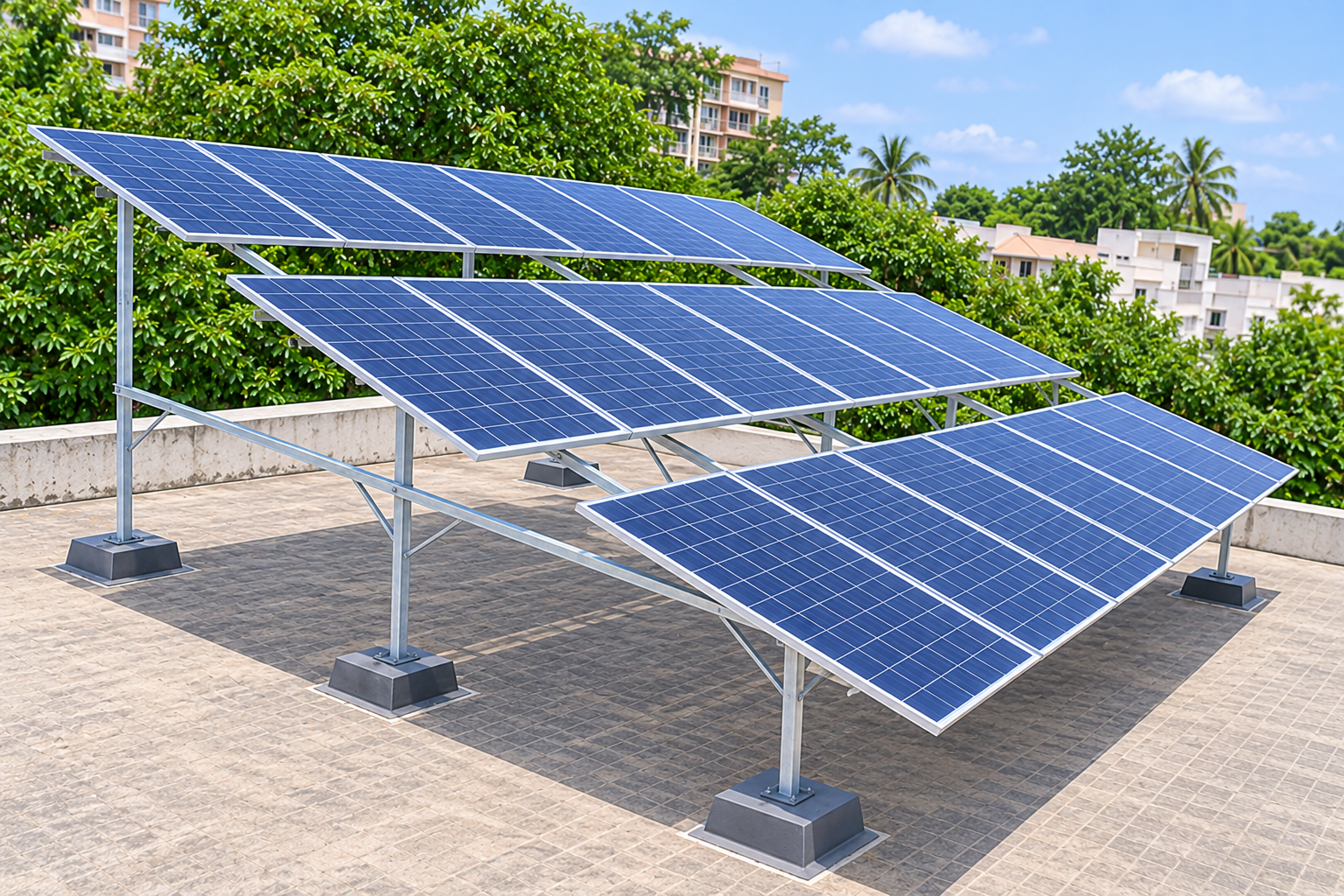
Solar Mounting Structure Manufacturer in India: Reliable Solutions for Long-Lasting Solar Projects
India’s solar energy sector is growing rapidly as businesses, industries, and infrastructure developers move towards cleaner and more sustainable power sources. With increasing investments in rooftop solar systems, ground-mounted solar power plants, and large-scale solar installations, the demand for strong and reliable solar mounting structures is also increasing.
Solar panels alone cannot ensure the efficiency of a solar installation; the supporting structure also plays an important role in maintaining stability, proper positioning, and long-term performance. The mounting structure plays an equally important role by holding solar panels securely, maintaining the correct installation angle, and providing stability against environmental conditions such as wind, rain, and temperature changes.
Choosing an experienced Solar Mounting Structure Manufacturer in India is therefore an important decision for solar project developers, EPC contractors, and industrial buyers. Ajmera Metals provides metal manufacturing solutions backed by experience in cold roll forming and sheet metal component manufacturing, supporting the requirements of different industrial applications.
In this blog, we will explore the importance of solar mounting structures, their different types, key material considerations, and what businesses should look for when selecting a manufacturing partner.
What Is a Solar Mounting Structure?
A solar mounting structure is a supporting framework used to install and secure solar panels in the required position. It keeps the panels stable while allowing them to receive sufficient sunlight throughout the day.
These structures are commonly manufactured using materials such as galvanized steel and aluminium, depending on project requirements, environmental conditions, and structural specifications.
A properly designed solar mounting system helps:
Keep solar panels securely positioned.
Maintain the required panel inclination and orientation.
Support the overall stability of solar installations.
Withstand expected wind and environmental loads.
Improve the durability of the complete solar power system.
Make installation and maintenance more manageable.
The quality of the mounting structure directly influences the reliability of the solar installation. That is why selecting the right manufacturer is important for both small and large-scale solar projects.
Why Is the Demand for Solar Mounting Structures Increasing in India?
India has significant potential for solar energy because of its geographical conditions and growing focus on renewable electricity. Government initiatives, commercial solar installations, industrial rooftop projects, and utility-scale developments are contributing to the expansion of the solar sector.
As more organisations invest in solar energy, they need mounting systems that can meet specific site conditions and project requirements.
Some important factors driving this demand include:
1. Growing Industrial Solar Installations
Manufacturing companies, warehouses, and commercial facilities are increasingly installing solar panels to manage electricity expenses and reduce dependence on conventional energy sources. These installations require mounting structures designed for their available roof space and load conditions.
2. Expansion of Ground-Mounted Solar Projects
Large solar power plants require extensive mounting frameworks to support multiple solar panels. These projects need consistent manufacturing quality, accurate dimensions, and dependable structural performance.
3. Focus on Renewable Energy
Businesses are becoming more conscious of energy efficiency and environmental responsibility. Solar energy provides an opportunity to generate electricity while supporting long-term sustainability goals.
4. Need for Durable Supporting Structures
Solar panels are generally expected to operate for many years. Their supporting structures must therefore be selected carefully to provide suitable strength, corrosion resistance, and long-term stability.
Different Types of Solar Mounting Structures
Not every solar project requires the same mounting arrangement. The selection depends on installation location, available space, roof conditions, panel configuration, and project design.
Here are some commonly used solar mounting structures.
1. Rooftop Solar Mounting Structures
Rooftop mounting structures are used to install solar panels on residential, commercial, and industrial buildings. They are designed according to roof type, available space, and the required panel orientation.
These structures are particularly useful for factories, commercial buildings, warehouses, and other facilities with suitable rooftop areas.
2. Ground-Mounted Solar Structures
Ground-mounted structures are installed directly on prepared land and are commonly used in large solar power projects.
They provide flexibility in panel arrangement and can be designed according to land conditions, soil characteristics, and project capacity. Proper foundation design and structural engineering are essential for these installations.
3. Fixed-Tilt Solar Mounting Structures
Fixed-tilt structures hold solar panels at a predetermined angle. Their design is relatively straightforward and suitable for many commercial and utility-scale solar installations.
The tilt angle is generally selected according to the project’s geographical location and solar performance requirements.
4. Solar Structures for Special Applications
Some projects require customised mounting arrangements because of unusual site conditions, panel dimensions, or installation requirements.
In such situations, manufacturers may develop specific metal sections and structural components according to approved technical drawings and engineering specifications.
Important Factors to Consider When Choosing a Solar Mounting Structure Manufacturer in India
Selecting a manufacturing partner is not simply about comparing prices. The quality of materials, manufacturing capabilities, dimensional accuracy, and ability to meet project requirements are equally important.
Here are some factors worth considering.
1. Material Quality
The material used in a solar mounting structure determines its strength, durability, and resistance to environmental conditions.
Galvanized steel is widely used because its zinc coating helps protect the underlying steel against corrosion. Aluminium is another option for applications where its properties are suitable.
Buyers should check material specifications, coating requirements, and applicable quality standards before finalising a supplier.
2. Manufacturing Capabilities
An experienced manufacturer should have suitable manufacturing processes and equipment to produce metal components with consistent dimensions.
Cold roll forming is particularly useful for manufacturing long metal sections with uniform profiles. It can help produce components according to specific design requirements while maintaining dimensional consistency.
3. Customisation Options
Different solar projects have different structural requirements. A manufacturing partner should be able to understand technical drawings, material specifications, dimensions, and production quantities.
Custom manufacturing capabilities are useful when standard sections do not meet the project’s requirements.
4. Corrosion Protection
Solar installations are exposed to outdoor conditions for extended periods. Moisture, temperature variations, and environmental exposure can affect the performance of metal structures.
Appropriate galvanization, protective coatings, and material selection help improve resistance to corrosion. The required protection should be determined according to the project’s environmental conditions.
5. Consistent Quality and Timely Delivery
Large solar projects often operate according to strict installation schedules. Delayed component supplies can affect project timelines.
Therefore, buyers should evaluate a manufacturer’s production capacity, quality control procedures, and ability to manage bulk orders.
How Cold Roll Forming Supports Solar Mounting Structure Manufacturing
Cold roll forming is an important metal processing technique used to manufacture different types of industrial profiles.
In this process, metal strips or coils pass through a series of rollers that gradually shape the material into a required cross-sectional profile. The process allows manufacturers to produce long, uniform metal sections with consistent dimensions.
For solar mounting structure applications, cold roll forming can offer several advantages:
Consistent profiles: Helps maintain uniform dimensions across manufactured sections.
Production efficiency: Supports the manufacturing of long metal profiles in required quantities.
Design flexibility: Allows different cross-sectional shapes to be produced according to technical requirements.
Material utilisation: Provides an efficient way to manufacture profiles from metal coils.
Repeatable quality: Supports consistency when production parameters and material specifications are properly controlled.
However, the suitability of cold roll-formed components depends on engineering design, material grade, thickness, structural loading, and manufacturing quality.
Why Choose Ajmera Metals for Metal Manufacturing Requirements?
Ajmera Metals is an established B2B metal manufacturing company based in Indore, Madhya Pradesh. Established in 2008, the company has developed experience in cold roll forming and sheet metal component manufacturing for various industrial applications.
The company serves sectors such as automotive, solar energy, electrical, construction, air pollution control, textile, and general engineering.
For businesses sourcing metal components for solar-related applications, manufacturing experience and an understanding of technical specifications are important considerations.
Key strengths of Ajmera Metals include:
Industry Experience: Established in 2008, Ajmera Metals brings experience in industrial metal component manufacturing.
Cold Roll Forming Expertise: The company works with cold roll forming processes to manufacture metal profiles according to specified requirements.
B2B Manufacturing Focus: Its manufacturing experience supports the requirements of industrial buyers and businesses.
Quality Certifications: Ajmera Metals is certified to ISO 9001:2015 and IATF 16949:2016 standards, reflecting its quality management systems.
Multiple Industry Applications: The company serves several industrial sectors, including solar energy, automotive, electrical, and construction.
For solar project developers, EPC contractors, and procurement teams, discussing drawings, material specifications, and production requirements with a manufacturing partner is an important first step.
Applications of Solar Mounting Structure Components
Solar mounting structures are used across different types of renewable energy installations.
Some common applications include:
Industrial rooftop solar power systems.
Commercial solar installations.
Ground-mounted solar power plants.
Large-scale renewable energy projects.
Solar installations for warehouses and manufacturing facilities.
Agricultural and institutional solar projects.
Each application may require different structural dimensions, material thicknesses, coating specifications, and load-bearing capabilities. Proper engineering assessment is essential before manufacturing and installation.
Frequently Asked Questions
1. What does a solar mounting structure manufacturer do?
A solar mounting structure manufacturer produces metal frameworks and supporting components used to install solar panels. These components are designed according to project requirements, structural specifications, and installation conditions.
2. Which material is commonly used for solar mounting structures?
Galvanized steel and aluminium are commonly used materials. The selection depends on structural requirements, environmental exposure, budget, and the design of the solar installation.
3. Why is galvanization important in solar mounting structures?
Galvanization provides a protective zinc coating over steel, helping reduce corrosion caused by moisture and outdoor exposure. It can improve the service life of steel components when the coating is appropriately specified and maintained.
4. What is the role of cold roll forming in solar structure manufacturing?
Cold roll forming shapes metal strips into specific profiles using a series of rollers. It is useful for producing consistent metal sections that can be incorporated into solar mounting systems.
5. How do I select the right solar mounting structure manufacturer in India?
Consider the manufacturer’s production capabilities, material quality, dimensional accuracy, quality certifications, customisation options, and delivery capacity. Always evaluate technical specifications before placing an order.
Choosing the Right Solar Mounting Structure Manufacturing Partner
A reliable solar mounting structure is an essential part of a well-designed solar power installation. From rooftop systems to large ground-mounted solar projects, the supporting framework must provide the required strength, stability, and durability under expected operating conditions.
Choosing the right Solar Mounting Structure Manufacturer in India can help businesses source components that meet their technical and project requirements. Factors such as material selection, cold roll forming capabilities, corrosion protection, quality management, and manufacturing consistency should all be considered during supplier evaluation.
With experience in industrial metal manufacturing, cold roll forming, and sheet metal components, Ajmera Metals supports the requirements of businesses across multiple industries, including solar energy.
For companies planning solar-related metal component requirements, connecting with an experienced manufacturer can be a practical starting point for discussing specifications, production capabilities, and potential manufacturing solutions.